
Save the Date: Sunday, Oct. 18
Mike will appear at the Fredericksburg Fall Home & Craft Show at the Expo & Conference Center in Fredericksburg, Virginia.
What鈥檚 eating Leslie鈥檚 lawn?
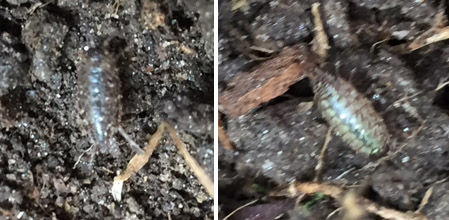
At first, Leslie in Silver Spring seemed to have an easy-peasy lawn grub problem. She writes: 鈥淪omething is devouring the roots of my lawn. At this point you can roll the dead grass up like a jelly roll. So I was excited last week to hear you talk about , the new form of Bt that targets beetle grubs. But I also need to aerate the lawn. So: If I want to use grubHALT and aerate, in which order do I do things and what’s the time frame?鈥�
Well, if you had grubs 鈥� the most common cause of the symptoms you describe 鈥� you would aerate the lawn as soon as the soil is nice and dry and then spread the new Bt right after.
But, my dear Leslie, the photos you attached of the culprit do not appear to be your everyday grub!
Billbug? Chinch bug? Maybe a mole cricket or two?
Although this is the exact time of year you鈥檇 expect to see the worst damage from grubs 鈥� the larval form of Japanese and other beetles in the scarab family 鈥� feeding on the roots of turf, the blurry photos she attached don鈥檛 appear to depict the big, white, crescent-shaped pests we all know and love so well.
Her problem looks more like billbugs or chinch bugs, which do occur occasionally in our region, or maybe even mole crickets, which are more of a Southern lawn pest but not impossible here.
Armed with this triad of possibilities, we are asking Leslie to make a positive ID of her new acquaintances using online state Extension Bulletins about lawn pests. We鈥檒l outline a plan of attack once the enemy has been identified!
But grubs are eating lawn roots right now
Are sections of your lawn still brown even after a good rain or a heavy watering? (Lawns need an聽inch of water a week from the skies or from you.)
Could be that the roots have been devoured by grimy grubs. To check, just lift up a dead section and you should be able to see the white crescent-shaped creatures munching away.
If you find grubs, there are two excellent choices for nontoxic control:
Apply Milky Spore, a concentrated natural soil organism, to your lawn while the weather is still warm. Any grub that ingests a spore will die, and then become an incubator, spreading the protection throughout the soil for years 鈥� perhaps decades 鈥� to come. Milky Spore is available at virtually all garden centers.
The other option is grubHALT 鈥� a brand new strain of Bt that is currently only available to homeowners from the mail-order supplier Gardens Alive (). Like Milky Spore, grubHALT kills grubs without harming anything else.
The same can鈥檛 be said of chemical controls.
An unexpected bonus of core aeration
Leslie originally emailed to ask for timing advice;聽while it聽appears she doesn’t have the聽root-chewing pest she thought she did, in her case it doesn鈥檛 matter:聽The core aeration she plans to have done to reduce the soil compaction and improve the drainage in her lawn is going to wreak havoc on whatever nasty little creatures are lurking below.
Aerating machines work by pulling small plugs (鈥榗ores鈥�) from the soil, and research has shown that this removal has an unexpected side effect, slicing through the majority of grubs and other pests lurking in your lawn! Just be sure the lawn is bone-dry when you aerate so聽no earthworms will be harmed; they鈥檒l be in the moister areas deep below.
Running out of time to sow grass seed!
Tick, tick, tick! If you have a cool-season lawn (one that stays green over the winter, such as聽fescue or bluegrass), time is running out for you to overseed patchy areas or reseed the whole thing.
Although grass seed and patch kits are heavily marketed in the spring, the chance of seed surviving in the cold soils of that season are slim. But cool-season seed sown in September germinates fast in our still-warm soil, then gains vigor in the shorter, cooler days of fall (instead of the burning heat of summer).
In short, this month provides the conditions these grasses greatly prefer.
This is also the perfect month to aerate a cool-season lawn to reduce soil compaction and improve drainage.
It鈥檚 also the perfect time for a fall feeding of compost, corn gluten meal or a bagged organic fertilizer labeled for use on lawns.
Just don鈥檛 delay!


