
This article was republished with permission from 91欧美激情’s news partners at . Read the story at Maryland Matters.
This content was republished with permission from 91欧美激情鈥檚 news partners at Maryland Matters. Sign up for聽听迟辞诲补测.
A showdown between the House and Senate chambers over education funding intensified Thursday when House budget negotiators showed up for an afternoon meeting, while senators stayed in place across the street.
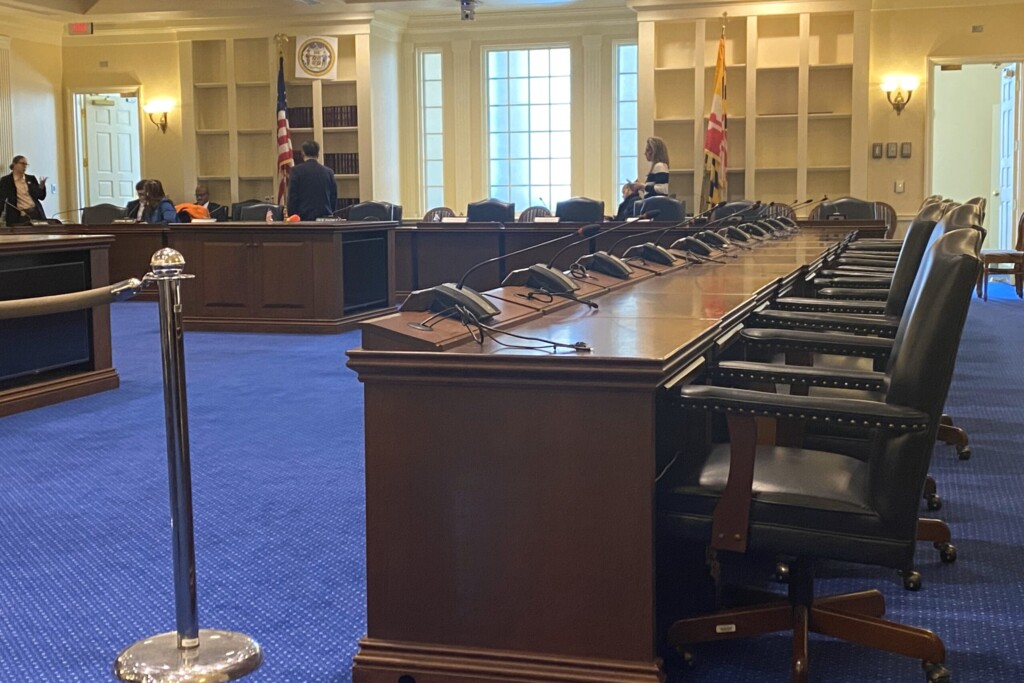
The Budget and Taxation Committee remained in a voting session in the Miller Senate Office Building as legislative staffers, 颅administration officials and advocates crowded the House Appropriations Committee room, where earlier budget negotiations had been held.
While an initial meeting of the budget conference committee on Tuesday resulted in the swift resolution of dozens of minor differences between versions of the state budget passed by the House and Senate, just a handful of issues were left to be ironed out Thursday.
One of them was a perennial debate over a tiny sliver of the state鈥檚 $63 billion budget 鈥� funding for the Broadening Options and Opportunities for Students Today, or BOOST, program, which provides money for low-income students to attend private schools.
While the House鈥檚 budget plan phased out BOOST 鈥� as House spending plans have for several years 鈥� a Senate budget amendment added $2 million to the program. In January, Gov. Wes Moore (D) released a budget that reduced the program鈥檚 allocation from $10 million annually to $8 million and phased out the existence of the program in future years.
One hour and four minutes after the committee鈥檚 scheduled start time, House Appropriations Chair Ben Barnes (D-Prince George鈥檚 and Anne Arundel) addressed the crowd that had gathered in his committee room.
鈥淪orry for the delay everyone. The Senate finished voting about a half-hour ago and we were trying to give them every opportunity to come to conference today. 鈥he House is here ready to work out any differences,鈥� Barnes said.
鈥淭his entire session, the House has made public education its priority,鈥� he added.
If their Senate counterparts had shown up, House negotiators had planned to introduce two new budget solutions for education funding during Thursday鈥檚 meeting, Barnes said. The first would have shifted an additional $100 million to the Blueprint for Maryland鈥檚 Future Trust Fund. The other would have moved the disputed $2 million for BOOST funding to provide grants to local school districts for Blueprint grant coordinators.
During the seeming impasse at the House building, the third floor outside Senate committee rooms was mostly quiet, save for lawmakers and staff occasionally coming and going with wares to set up the committees鈥� annual dinners later that evening.
Budget & Taxation Committee Chair Guy Guzzone (D-Howard) said later that a firm meeting time with House negotiators had never been set for Thrusday, and that he had been in regular conversation with Barnes during the day.
Guzzone did not say how he planned to respond to the House鈥檚 new proposals, but expressed optimism that a compromise between the chambers can still be reached.
鈥淚 think reasonable minds will come together eventually. 鈥here are very heartfelt positions on both sides, caring about children鈥檚 education,鈥� Guzzone said. 鈥淚t鈥檚 reasonable to feel strongly about these things.鈥�
The chambers are up against a deadline to pass a budget by Monday, the 83rd day of session. If the deadline is passed, the governor will issue a proclamation extending the budget portion of the session to Day 90, the last day of the regular legislative session.
The House and Senate versions of the budget already included a $100 million gap in allocation to the Blueprint Fund, which is meant to serve as a savings account ahead of massive increases in state public education funding over the next decade.
Moore included $500 million for the fund in his initial budget proposal in January. The House聽聽when the budget passed that chamber earlier this month, for a total of $900 million in future education investments.
The Senate scaled that back by $100 million to $800 million when it聽聽a week later.
鈥淲e know we鈥檙e facing a serious Blueprint shortfall in the outyears,鈥� Barnes said Thursday.
The Blueprint Fund was projected to have a $2.2 billion surplus at the end of Moore鈥檚 Fiscal 2024 budget, but would have a near-zero balance in the 2026 fiscal year and run into deficit in 2027, according to early budget analyses.
The additional $100 million Blueprint investment now proposed by the House, which would bring the total influx to $1 billion, would come from a reduction in overpayment to the state鈥檚 pension plan ($12 million) and $88 million from the Maryland Stadium Authority鈥檚 Racing and Community Development Financing Fund.
That fund is the subject of one of the only other outstanding budget provisions, as leaders from both chambers seek to force movement on a聽聽at least $375 million into redevelopment of Maryland鈥檚 horse racing tracks and Pimlico and Laurel Park.


